Modern Wooden Flower Cat Tree: Hammock + Scratch Post
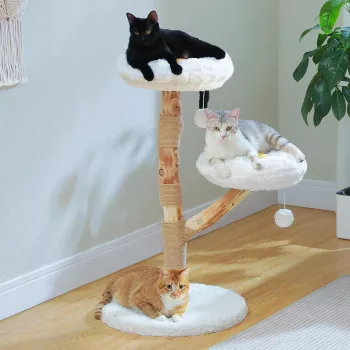
A sturdy cat tree can do more than fill a corner—it can give cats a reliable place to climb, scratch, lounge, and observe while keeping everyday furniture safer. This modern wooden flower-style design pairs a cozy hammock with dedicated scratching surfaces and elevated platforms, aiming to suit bigger bodies without looking bulky in a living space.
What Makes This Flower-Style Wooden Cat Tree Different
Many cat trees prioritize height and plush coverage, but a flower-style wooden cat tree takes a more furniture-forward approach. The silhouette is cleaner and more intentional, so it can blend into contemporary interiors instead of reading like a pet “tower.” Wood construction also tends to look streamlined while supporting the kind of stable, grounded feel that larger cats appreciate when they jump up, turn around, and settle in.
The standout feature is the multi-level “flower” platform concept: separate lounging stations at different heights. This creates natural choices—one cat may prefer a mid-level perch for quick naps, while another claims the top spot for surveying the room. Add a built-in hammock for cradled rest, plus a dedicated scratching post for daily claw maintenance, and the result is a single piece that supports several core cat behaviors in one footprint.
Comfort Features Cats Actually Use (Hammock, Perches, Resting Spots)
Cats don’t just want height—they want options. A hammock is often the “sticky” feature that keeps a cat coming back because it supports both curled sleeping and loose, sprawled lounging. For heavier cats, a cradled surface can feel especially inviting, since it distributes weight and helps the body relax rather than balancing on a flat edge.
Multiple perch levels also matter more than people expect. Cats choose warmer or cooler spots throughout the day, and they’ll adjust their preferred height based on confidence, energy level, or household activity. Platforms with defined edges can add security, reducing the feeling of being “exposed” while resting off the ground.
For day-to-day use, placement makes a big difference. Many cats use a tree most consistently when it’s near a window for enrichment (sun, breezes, bird-watching) but not blocking a busy walkway where people constantly pass. If you’d like guidance on general enrichment needs, the ASPCA’s cat care resources offer a helpful overview of how environment influences behavior.
Scratching Post Benefits: Claws, Stress Relief, and Furniture Protection
Scratching is a normal, necessary behavior: it lets cats stretch their shoulders and back, shed old claw sheaths, and leave scent markings that help them feel secure. When a cat doesn’t have an obvious, repeatable scratching target, they’ll choose one—often the sofa arm, rug edge, or doorway trim.
A dedicated scratching post on the cat tree simplifies training because it’s part of a routine loop: climb, scratch, lounge, repeat. The most effective setup is strategic, not hidden. For the first 1–2 weeks, place the tree close to the current “problem area” or along a main path of travel so the cat naturally encounters it. Reinforce use with praise and a quick play session near the post; avoid punishment, which can increase stress and make scratching more frequent in other areas.
In multi-cat homes, scratching zones can reduce conflict by giving everyone a shared, neutral outlet. For deeper insight into why cats scratch and how to support the behavior, see International Cat Care’s guidance.
Stability and Size Considerations for Large Cats
For large cats, stability usually matters more than extra height. Look for a base that sits flush, vertical supports that don’t flex, and resting surfaces that feel supportive when a cat shifts position. A hammock should cradle without collapsing or twisting, and platforms should have comfortable spacing for step-ups instead of requiring long leaps—especially important for seniors or heavier cats.
Quick Fit Checklist for Larger Cats
| Feature | Why it matters | What to look for at home |
|---|---|---|
| Stable base | Prevents wobble during jumps and stretching | Sits flush on the floor; doesn’t rock when pushed lightly |
| Supportive hammock | Comfort for heavier bodies and longer naps | Cradles the cat without collapsing or twisting |
| Step-friendly layout | Easier climbing and safer descents | Platforms are reachable without risky leaps |
| Dedicated scratching area | Reduces furniture damage and supports claw health | Post is easy to access on the main path of travel |
Where It Fits Best at Home (Layout and Daily Routine)
Care and Upkeep (Keeping Wood, Fabric, and Scratching Areas Fresh)
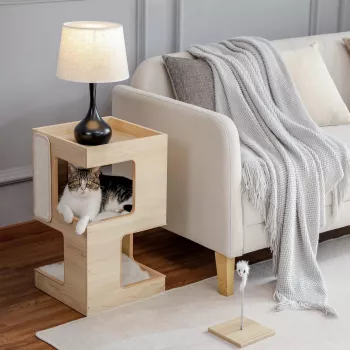
A Modern Alternative for Smaller Spaces
In-Stock Picks to Compare
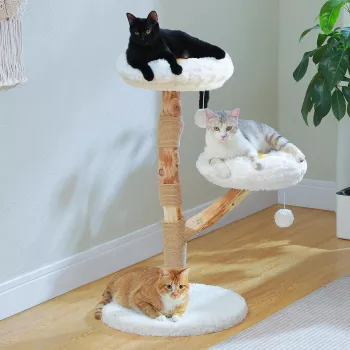
- Modern Wooden Flower Cat Tree with Hammock and Scratching Post for Large Cats (a sleek wood-forward design with multiple perches and a hammock for full-body lounging).
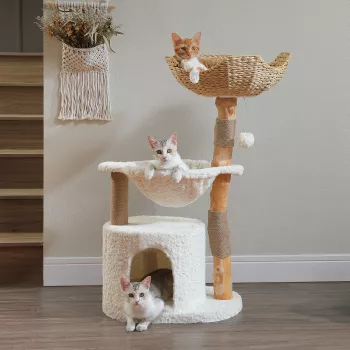
- 3-Level Modern Cat Tree with Scratching Pad, Cushions, Condo and Toy (a smaller multi-function option with a condo-style retreat, cushions, and a scratching surface).
FAQ
Will a hammock be comfortable for a large cat?
Yes—when the hammock is supportive, it cradles the body and can reduce pressure points compared to narrow perches. Check that it stays stable when your cat shifts positions and doesn’t twist or sag excessively.
Where should a cat tree be placed to encourage scratching on the post?
Place it near your cat’s usual scratching spot or along a main pathway so the post is easy to “find.” Pair the area with play and praise, and avoid hiding the tree in a low-traffic corner.
How often should the cat tree be tightened or checked for wobble?
Check hardware right after assembly, then monthly for the first few months as the tree settles with use. After that, seasonal checks help keep it steady—especially important for larger cats that put more force into jumping and stretching.








Leave a comment