Golden Ceramic Sink + Brass Faucet & Drain: Luxe Vanity Set
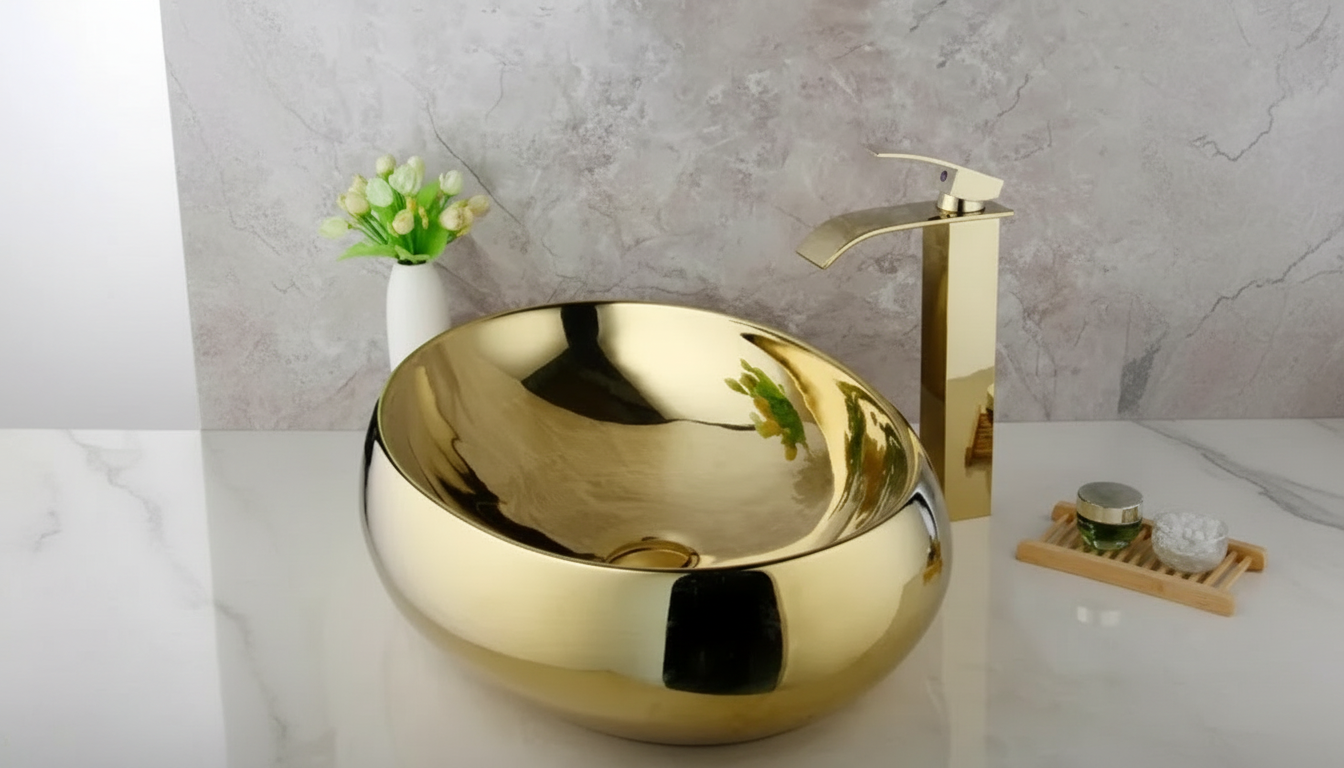
Golden Ceramic Sink with Brass Faucet and Drain Combo for Luxury Bathrooms
A coordinated sink, faucet, and drain set can transform a vanity into a true focal point while simplifying installation planning. This golden ceramic sink paired with a brass faucet and matching drain is designed for bathrooms that prioritize warm metallic finishes, refined materials, and a cohesive, high-end look. When the sheen of glazed ceramic meets the warmth of brass, the result reads intentional—like a designer specified every detail from the spout to the stopper.
What Makes This Set Feel Luxurious
Luxury often comes down to consistency and materials you can see (and feel) every day. A golden-toned ceramic basin brings a rich glow that plays beautifully with bathroom lighting, while brass hardware adds warmth and structure around it.
- Coordinated finish story: golden ceramic paired with brass hardware creates a cohesive vanity centerpiece.
- Upscale material contrast: glossy ceramic against warm metal adds depth and dimension.
- Matched combo advantage: reduces the risk of mismatched tones between faucet, drain, and sink.
- Flexible styling: can lean modern glam or classic depending on countertop, mirror, and lighting choices.
Design Pairings That Highlight Gold and Brass
Gold and brass are easiest to style when nearby surfaces keep them grounded. The goal is to let the metallic warmth shine without competing finishes pulling attention away from the vanity.
- Countertops: white quartz or light marble-look surfaces intensify warm gold tones; darker stone creates dramatic contrast.
- Cabinetry: walnut, oak, or matte black vanities complement brass and keep the look balanced.
- Mirrors and lighting: warm-temperature bulbs and brass accents help finishes feel consistent from sink to sconces.
- Backsplash ideas: small-format white tile for a classic look, or textured beige/greige tile for a spa feel.
- Hardware coordination: match cabinet pulls and towel bars to brass (or mix with matte black for a crisp, modern edge).
What’s Included and What to Confirm Before Ordering
This style of combo typically includes the ceramic sink, a brass faucet, and a matching drain—everything needed to keep the visible pieces consistent at the vanity. Before ordering, it’s worth double-checking fit and compatibility so installation stays smooth.
- Confirm sink type and fit: ensure the sink style matches the vanity plan (vessel vs. drop-in vs. undermount) and countertop cutout requirements.
- Check faucet compatibility: verify mounting style (single-hole vs. widespread) aligns with sink/countertop drilling.
- Drain compatibility: confirm drain sizing and whether the sink has an overflow; overflow sinks require a compatible drain.
- Measure for clearance: faucet height and spout reach should suit the bowl depth and basin placement to reduce splashing.
Quick Checklist Before Installation
| Item | What to verify | Why it matters |
|---|---|---|
| Sink fit | Sink type + countertop cutout or mounting method | Prevents installation delays and rework |
| Hole configuration | Single-hole or multi-hole drilling needs | Ensures faucet can be mounted properly |
| Drain/overflow | Overflow present or not; drain compatibility | Avoids leaks and incorrect drain selection |
| Faucet dimensions | Spout reach and height relative to basin | Improves usability and minimizes splashing |
| Supply connections | Existing shutoff valves, supply line length, and access | Simplifies install and reduces surprise add-ons |
Installation Notes for a Clean, High-End Finish
A luxury look depends on more than the fixture itself—it also depends on alignment, clean edges, and protected finishes. A few careful steps can make the final result look crisp and professionally installed.
- Dry-fit first: place the sink and faucet without sealant to confirm alignment, reach, and handle clearance.
- Use the right sealant: apply mildew-resistant, bathroom-grade silicone where the sink meets the countertop (as required by the sink type).
- Protect the finish: use soft cloths and non-marring tools when tightening brass components to avoid scratches.
- Align the drain carefully: seat gaskets evenly and avoid over-tightening, which can stress ceramic.
- Plan the plumbing: verify P-trap alignment and available space inside the vanity before final tightening.
- Final detail: wipe down and buff brass after installation to remove fingerprints and water spots.
If water efficiency is a priority, it’s also worth reviewing guidance on bathroom sink faucet performance and labeled flow rates from the EPA WaterSense program. For broader plumbing product standards and safety frameworks, references from IAPMO and testing/certification information from NSF can be helpful when comparing fixtures and components.
Care and Maintenance for Golden Ceramic and Brass
Keeping a golden ceramic sink and brass faucet looking polished comes down to gentle cleaning and consistent drying—especially in bathrooms with hard water.
- Daily/weekly cleaning: use a soft cloth with mild soap; rinse and dry to reduce mineral spotting.
- Avoid harsh cleaners: skip abrasive pads, strong acids, and bleach that can dull finishes or etch surfaces.
- Water quality matters: in hard-water areas, drying after use helps preserve shine on brass and keeps ceramic bright.
- Prevent staining: wipe cosmetics, hair dyes, and cleaners promptly to protect the ceramic surface.
- Long-term upkeep: periodically check drain and faucet connections for tightness and address small drips early.
Where This Set Works Best
Product Options Available Now
- Golden Ceramic Sink with Brass Faucet and Drain Combo for Luxury Bathrooms
- 3-Level Modern Cat Tree with Scratching Pad, Cushions, Condo and Toy
- Golf Cart Bag with 14-Way Divider
FAQ
Does the drain work with an overflow sink?
Overflow sinks require an overflow-compatible drain. Check whether the sink has an overflow opening and confirm the included drain is designed to match that configuration before installation.
How can brass finishes be kept looking new in a bathroom?
Clean with mild soap and water, then rinse and dry to prevent hard-water spotting. Avoid abrasive pads and acidic cleaners, and buff gently with a soft cloth to maintain the finish.
What should be measured before buying a sink and faucet combo?
Verify the sink mounting style/cutout, faucet hole configuration, spout reach and height, drain size and overflow needs, clearance to the backsplash or mirror, and under-sink plumbing space inside the vanity.











Leave a comment