Adjustable Hook Auto Paint Drying Rack on Swivel Wheels

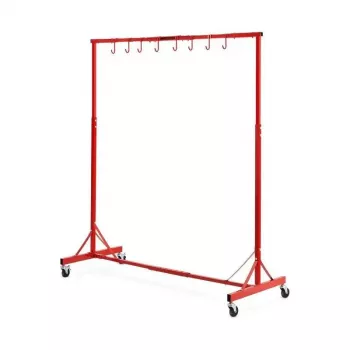
Heavy-Duty Automotive Painting Drying Rack with Adjustable Hooks & Swiveling Wheels
A dependable drying rack keeps freshly painted panels elevated, separated, and easy to move—helping reduce dust nibs, edge contact, and bottlenecks between prep, spray, and reassembly. A mobile, hook-adjustable rack creates a controlled “in-between” space where parts can flash, cure, and wait safely without stealing booth or bench real estate.
What a mobile drying rack solves in a paint workflow
Paint work rarely fails in the booth—it fails between steps. A drying rack reduces those vulnerable moments when parts are set down “just for a minute” and pick up scratches, imprints, or contamination.
- Prevents freshly coated parts from touching benches, walls, or each other, reducing marring and rework.
- Creates predictable staging: parts can be hung, rolled to a safe corner, then returned for masking, polishing, or assembly.
- Improves airflow around edges and contours compared with laying parts flat, helping coatings cure more evenly.
- Frees up booth and table space so prep and spray tasks can continue without waiting for parts to dry.
When jobs stack up—multiple trims, brackets, mirror caps, and hardware—having a dedicated rolling “dry zone” keeps the pace steady and helps prevent accidental contact with soft coatings during flash times.
Key features that matter: adjustable hooks and swiveling wheels
Not all racks behave the same once they’re loaded. The two features that typically separate a frustrating rack from a daily-driver rack are hook flexibility and predictable mobility.
- Adjustable hooks support different shapes—trim, bumpers, grilles, mirrors, brackets, and small panels—so the rack adapts as the job changes.
- Spacing control helps avoid parts clacking together when rolling across seams or shop floor debris.
- Swiveling wheels make it easier to position parts without bumping corners; reliable brakes help with stationary drying.
- A heavy-duty frame reduces wobble, keeping parts stable when loading, unloading, or moving through doorways.
Feature-to-benefit checklist
| Feature | Why it helps | Best used for |
|---|---|---|
| Adjustable hooks | Custom spacing and support points to avoid contact marks | Mixed-size parts and varied batch work |
| Swiveling wheels | Tight turns and controlled positioning in crowded bays | Rolling from booth to drying area |
| Stable heavy-duty frame | Less sway while moving; safer loading/unloading | Heavier parts and frequent repositioning |
| Mobile footprint | Creates a dedicated staging zone without permanent fixtures | Small shops and flexible layouts |
Typical parts and projects this rack can handle
A hook-based rack shines when parts are irregular, freshly cleared, or too delicate to rest on a flat surface without risking edge prints.
- Automotive exterior components: grilles, spoilers, mirror caps, door handles, trim pieces, emblems, and brackets.
- Motorcycle and powersports parts: fairings, covers, small panels, and hardware batches.
- Production-style batching: multiple small components in one session to reduce gun cleanups and booth changeovers.
- Detail and restoration work where parts need to stay protected between coats, flash times, and final cure.
Even when a part could technically sit on a stand, hanging often keeps the most visible faces away from accidental contact and makes it easier to walk around and inspect coverage under shop lighting.
Setup tips for cleaner drying and fewer defects
A rack is only as clean as the habits around it. Small setup choices—hook placement, spacing, and where you park—directly affect nibs, imprints, and rework time.
- Plan the load order: hang the largest or heaviest parts first, then fill in smaller pieces to keep the rack balanced.
- Use non-marring contact points: place hooks where they won’t distort fresh edges; avoid sharp hook contact on visible faces.
- Create airflow lanes: leave consistent gaps between parts so overspray and solvent vapor don’t get trapped.
- Park it smart: choose a low-traffic, low-dust area away from sanding, grinding, or sweeping; lock the wheels during curing.
- Label or group parts by job: keep fasteners and matching trim together to prevent mix-ups during reassembly.
If solvent odors linger around densely packed parts, it’s often a spacing issue. A little extra clearance can help coatings gas off more evenly, especially on complex contours.
Mobility and shop-floor practicality
For solvent-based products and spray areas, follow applicable safety guidance and local rules. General references include OSHA 29 CFR 1910.107, NFPA 33, and EPA basics on VOCs and indoor air quality.
Care, maintenance, and long-term durability
Product spotlight: Heavy-Duty Automotive Painting Drying Rack with Adjustable Hooks & Swiveling Wheels
For shops and home garages that need a practical way to stage painted components, the Heavy-Duty Automotive Painting Drying Rack with Adjustable Hooks & Swiveling Wheels is built for flexible layouts and controlled movement. Adjustable hook placement helps accommodate changing batches—from trim and brackets to larger exterior components—while swiveling wheels make positioning easier around crowded bays.
Quick buying snapshot
| Item | Price | Availability |
|---|---|---|
| Heavy-Duty Automotive Painting Drying Rack with Adjustable Hooks & Swiveling Wheels | $90.01 | In stock |
More in-stock picks
- Golf Cart Bag with 14-Way Divider
- 3-Level Modern Cat Tree with Scratching Pad, Cushions, Condo and Toy
FAQ
How far apart should parts be spaced on a drying rack?
Leave enough clearance that parts won’t touch if the rack bumps or rolls over a seam, and prioritize airflow around edges and contours. If pieces can swing, increase spacing or adjust hook points so they can’t clack together.
Can a wheeled drying rack be used right after painting?
Yes, but move slowly, avoid sudden turns, and lock the wheels once parked. If the coating is still very soft, let it flash briefly before rolling to reduce dust attraction and accidental contact marks.
How can hooks be used without leaving marks on fresh paint?
Hang from hidden or non-cosmetic points when possible, keep hooks clean and smooth, and avoid loading sharp edges or visible faces. Adjust hook angles so the part rests securely without rubbing as it moves.









Leave a comment