1DD+2BA+4 Planar Tribrid IEMs: Sound & Fit Guide

High-Fidelity Tribrid In-Ear Headphones: 1DD + 2BA + 4 Planar Drivers Explained
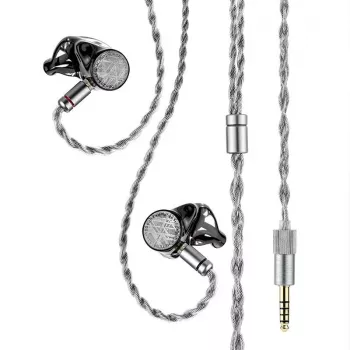
Tribrid in-ear headphones combine multiple driver technologies to cover bass weight, midrange clarity, and treble detail with less compromise than single-driver designs. This model uses a 1DD+2BA+4 planar configuration aimed at resolving complex mixes while keeping low-end impact and a spacious, layered presentation for music, gaming, and monitoring. For more guidance, see Reviews by David Haworth – Head-Fi.
If you’re shopping for a premium, highly resolving IEM, the goal isn’t just “more detail”—it’s better control across the spectrum, cleaner separation when tracks get busy, and consistent performance at real listening volumes. That’s exactly what a carefully tuned multi-driver build is designed to deliver. For further reading, see TRI I3 – Reviews – Head-Fi.org.
What a tribrid driver layout is designed to do
A tribrid layout assigns different parts of the frequency range to driver types that are naturally strong in those areas. When it’s executed well, the sound feels more effortless—bass hits with authority, vocals stay clean, and cymbals retain texture without turning into hash.
- Dynamic driver (DD) role: Moves more air for physical bass presence and natural decay, especially in sub-bass and kick-drum fundamentals.
- Balanced armature (BA) role: Delivers fast transients and precise mids/upper-mids for vocals, guitars, and intelligibility without needing large diaphragm travel.
- Planar driver role: Reproduces fine texture and micro-detail with consistent diaphragm control, often improving separation and perceived speed in busy passages.
- Why combine them: Distributes frequency responsibilities across specialized drivers to reduce distortion and maintain clarity at higher listening levels.
- Trade-offs to expect: More complex acoustic design and crossovers; fit and seal become even more important to realize intended tuning.
How the 1DD + 2BA + 4 planar approach can shape the sound
With seven drivers total, the listening experience often comes down to how smoothly the tuning “hands off” from one driver group to another. The promise is a big, controlled low end, articulate mids, and a treble region that stays informative without becoming fatiguing.
- Bass: DD-driven low end typically provides fuller slam and rumble; a good seal is critical for sub-bass extension and consistent tonality.
- Midrange: BA drivers often emphasize clarity and presence; this can help vocals sit forward with clean edges and strong articulation.
- Treble and air: Planar drivers can add crispness and “air” above the presence region; sensitivity to poor recordings can increase if treble is elevated.
- Imaging and separation: Multiple drivers can improve layering, making it easier to locate instruments and cues in dense mixes or competitive games.
- Coherency checks: Listen for smooth handoff between bass-to-mids and mids-to-treble (no sudden jumps in timbre or volume around crossover regions).
Driver types at a glance
| Driver type | Typical strengths | What to listen for |
|---|---|---|
| Dynamic (DD) | Bass weight, natural decay, physical impact | Sub-bass consistency with different ear tips; control on fast bass lines |
| Balanced Armature (BA) | Clarity, speed, vocal presence, detail | No shoutiness in upper mids; smooth transition into treble |
| Planar | Texture, separation, transient precision, airy extension | Treble smoothness; no metallic glare on cymbals and “S” sounds |
Fit, comfort, and isolation that affect real-world performance
With high-resolution IEMs, fit isn’t a minor detail—it’s the foundation. A small leak can erase sub-bass, shift the entire tonality brighter, and make the soundstage feel flatter.
- Seal first: Bass response and tonal balance change dramatically with imperfect insertion depth or tip size; test multiple tips to stabilize the low end.
- Comfort considerations: Larger multi-driver shells may protrude more; aim for even pressure and no hot spots during a 30–60 minute session.
- Isolation: Better isolation reduces outside noise for commuting or stage monitoring and helps keep listening volume lower for the same perceived detail.
- Cable and connectors: Check strain relief, connector stability, and microphonics (cable noise) while walking; a shirt clip can help reduce cable rub.
- Tip materials: Silicone often increases perceived clarity; foam can soften treble and improve isolation—use whichever best matches ear shape and listening goals.
For a reality check, try the same track with two tip types. If the bass suddenly “locks in” and vocals become more centered, you’ve found a better seal—and the tuning will make far more sense.
Source pairing, power needs, and practical setup
Key details and at-a-glance buying notes
Quick reference
| Item | Details |
|---|---|
| Product | High-Fidelity Tribrid In-Ear Headphones with 1DD+2BA+4 Planar Drivers |
| Price | 978.49 USD |
| Availability | In stock |
| Primary strengths to evaluate | Bass authority, mid clarity, treble smoothness, imaging/separation, long-session comfort |
Recommended in-stock gear pairing
- High-Fidelity Tribrid In-Ear Headphones with 1DD+2BA+4 Planar Drivers (premium tribrid monitoring for music and gaming)
- USB/XLR Dynamic Microphone for Podcasting, Gaming, Streaming & Recording (simple USB use now, XLR upgrade path later)
FAQ
Do tribrid in-ear headphones need an amplifier?
Many tribrid IEMs will play loudly from a phone or laptop, but a clean dongle DAC/amp can reduce hiss and provide better headroom and control. Choose based on low noise and stable volume range rather than chasing raw power.
What ear tips help get the best bass and comfort?
The best bass comes from a consistent seal, so try multiple tip sizes and insertion depths until sub-bass stops fading in and out. Silicone tips often sound clearer, while foam tips can improve isolation and slightly smooth treble for longer sessions.
Are multiple drivers always better than a single driver?
Not always—more drivers can improve specialization and separation, but the tuning and crossover coherence determine whether the sound feels natural. A well-tuned single driver can feel more unified, while a well-executed tribrid can excel in layering, imaging, and micro-detail.











Leave a comment