Large Cowhide Leather Duffel: Weekend & Carry-On Guide
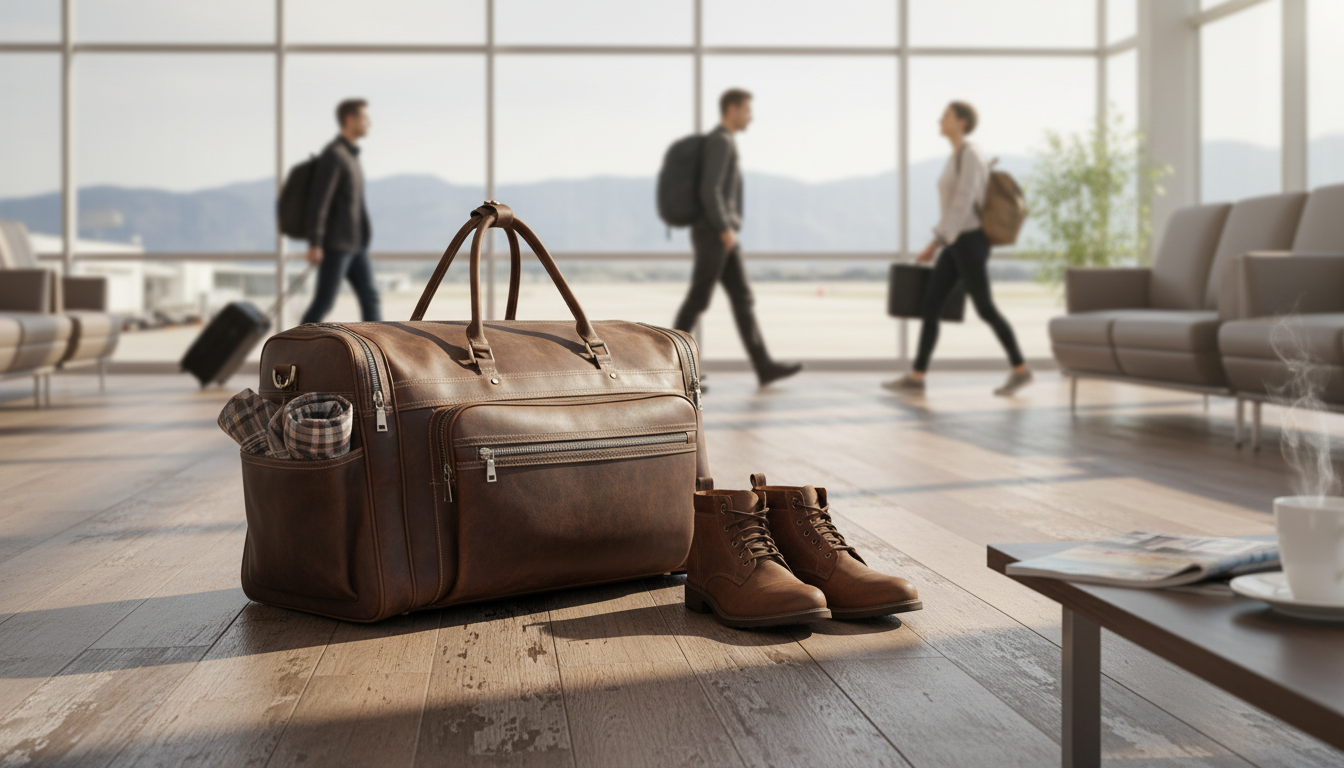
Genuine Leather Men’s Travel Duffel Bag for Weekend Trips and Carry‑On Days
A well-made leather duffel can cover short business travel, gym-to-office days, and spontaneous weekend getaways while aging into a distinctive patina. The sweet spot is a large cowhide travel tote that’s roomy enough for a couple of outfits and shoes, yet flexible enough to slide into tight spaces on trains, in trunks, or in overhead bins (rules vary). Below is what matters most—materials, build, capacity, comfort, and care—so packing and carrying feel simple from departure to check-in.
What a Large Cowhide Duffel Does Best
- Handles 1–3 day trips with space for clothing, shoes, and toiletries without the bulk of a rolling suitcase.
- Works as a flexible carry-on shape for cars, trains, and many flights (size limits vary by airline).
- Transitions from casual travel to smarter looks thanks to the natural texture of genuine leather.
- Improves over time as cowhide softens and develops a lived-in patina that looks better with use.
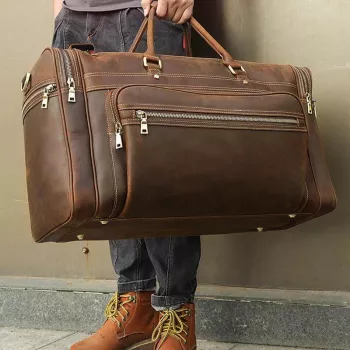
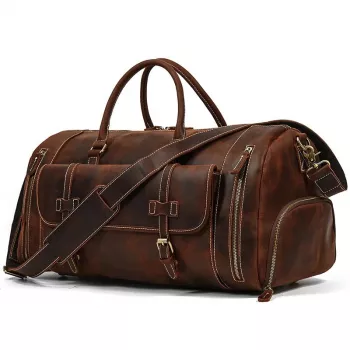
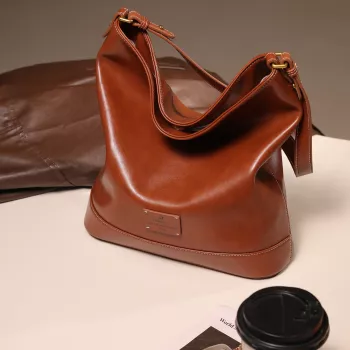
If you want a dedicated weekend bag that can also serve as a sharp-looking gym-to-office hauler, consider the Genuine Leather Men’s Travel Duffel Bag – Large Cowhide Weekend Luggage Tote. For lighter days or personal-item duty, the Small Half Moon Leather Bag is a clean, compact option for essentials.
Material and Build Quality: What to Check on Arrival
Genuine cowhide should feel substantial in the hand—not stiff like plastic, and not paper-thin. Because leather is a natural material, expect small variations in grain and tone; those details often signal authenticity rather than flaws.
- Leather feel: Look for natural grain variation instead of a perfectly uniform, glossy film-like surface.
- Stitching: Seams should be straight and tight, with reinforcement where stress concentrates (handle bases, strap anchors, zipper ends).
- Edges and piping: Clean edging helps the bag keep its shape and resist corner scuffs.
- Hardware: Zippers and buckles should glide smoothly without snagging; metal hardware typically outlasts lightweight coated pieces.
- Lining: A stable lining reduces sagging and helps protect contents; check for thin spots or loose threads.
Quick inspection checklist for a leather travel duffel
| Checkpoint | What “good” looks like | Why it matters on trips |
|---|---|---|
| Leather surface | Natural grain variation, no peeling film | Better aging and fewer cracks over time |
| Stitching | Even stitch length, reinforced handle bases | Prevents blowouts when the bag is packed heavy |
| Zippers | Smooth track, zipper ends securely stitched | Reduces jams during boarding or hotel check-in |
| Handles/strap anchors | Firm attachment points, no wobble | Comfort and safety when carrying long distances |
| Interior | Lining sits flat, pockets secured | Easier organization; less wear from sharp items |
If you spot defects, document them right away and keep packaging during the return window. For flight rules and screening expectations, it also helps to review official guidance like TSA: Carry-On Baggage.
Capacity Planning: Packing for a Weekend Without Overstuffing
Leather duffels reward smart packing. Overstuffing stresses zippers, distorts the silhouette, and makes the bag harder to carry. A good target is “full but compressible,” especially if you’ll be fitting into overhead bins or a carry-on sizer.
- Use packing cubes: They keep clothing from shifting and help reduce wrinkles in soft-sided luggage.
- Create a shoe zone: Use a shoe pouch to keep soles away from clothing; placing shoes at one end can help balance weight.
- Contain liquids: Pack toiletries in a leakproof kit and keep it near the top for quick access.
- Plan for a comfortable lift: Genuine leather adds weight, so pack with the walk from curb to gate (or parking to hotel) in mind.
- If flying, confirm dimensions: Airline limits vary; avoid overfilling so the bag can compress when needed. General baggage guidance is available via IATA: Baggage.
Carrying Comfort and Everyday Use
A duffel’s comfort comes down to how it rides when loaded. Even a premium bag can feel awkward if the weight distribution is off or if you always carry it the same way.
- Hand carry vs. shoulder carry: Alternating carry styles reduces fatigue during longer walks through terminals and city blocks.
- Detachable shoulder strap: Useful when you need hands for a phone, coffee, or boarding pass.
- Balance matters: Spread weight evenly so the bag doesn’t twist on the shoulder and bump your hip with every step.
- Quick-access setup: Wallet, keys, and earbuds are easier to manage with an interior pocket or a small pouch system.
- Road-trip advantage: Soft sides fit better into tight trunk spaces and under-seat gaps than rigid luggage.
Leather Care for Travel: Keeping Cowhide Looking Better Each Trip
For broader care basics and product-type recommendations, consult an authoritative care resource like Leathercare.org (Leather & Hide Council of America): Leather Care.
When This Style Makes the Most Sense (and When It Doesn’t)
Choosing Between Leather Travel Bags: A Simple Decision Path
FAQ
How do you care for a genuine cowhide duffel bag after travel?
Wipe it down with a soft, dry cloth, spot-clean any marks quickly, and let it fully air out before storing. Condition occasionally with a leather conditioner that matches the finish (test in a hidden area first), and store it lightly stuffed to help maintain shape.
Can a large leather duffel be used as a carry-on?
Often yes, but carry-on limits vary by airline and even by aircraft size. Check your carrier’s dimension rules before departure and avoid overpacking so the bag can compress to fit overhead bins or sizers.
What should be checked first when a new leather travel bag arrives?
Inspect stitching at stress points, confirm zippers glide smoothly, and test handle/strap anchors for secure attachment. Check the lining for thin spots or loose threads, and note natural leather variation while documenting any true defects within the return window.








Leave a comment