Hybrid-Driver IEM Guide: PentaconnEar & Detachable Cable
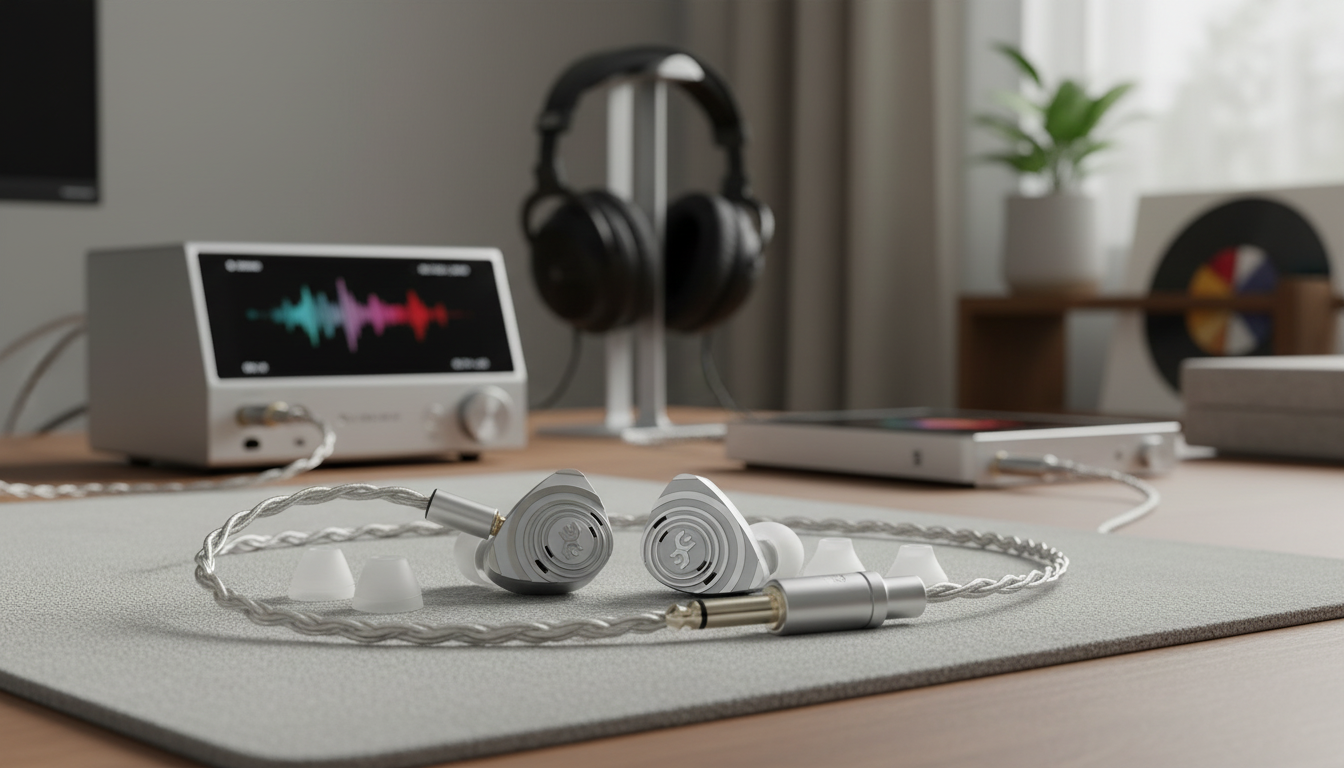
High-Fidelity Hybrid-Driver IEM with Detachable Cable and PentaconnEar Interface
Hybrid-driver in-ear monitors (IEMs) are built to blend two strengths that listeners often chase separately: the physical slam and rumble of a dynamic driver, plus the speed and fine detail that balanced armatures (or other high-frequency drivers) can deliver. Add a detachable cable and a PentaconnEar (NDICS) connector interface, and you get an everyday advantage too—serviceability, sturdier connections, and easier long-term ownership. Below is a practical guide to how these features translate to real listening, what to check for fit and source pairing, and how to avoid common buying regrets. For more guidance, see Ultimate Ears Goes Hybrid, New Flagship, New Cable System.
What Makes a Hybrid-Driver IEM Different
Most hybrid IEMs pair a dynamic driver for bass with one or more drivers dedicated to the mids and highs. When it’s done well, you hear weight and impact down low without losing vocal clarity or treble definition.
- Driver roles: the dynamic driver typically handles sub-bass and mid-bass punch, while balanced armatures often contribute crisp transients and micro-detail for upper frequencies.
- Crossover tuning matters: a well-integrated hybrid shouldn’t sound like “two earphones at once.” If bass feels detached from vocals, the blend may be off.
- What to expect: a satisfying sense of physicality on kick drums and bass drops, plus fast cymbal hits and well-defined edges on strings or synths.
- Quick listening cues: test bass texture on acoustic kick drums, check “s” and “t” consonants for sharpness, and listen for cymbal decay that trails naturally (not grainy or splashy).
PentaconnEar Interface and Detachable Cable: Practical Benefits
Detachable cables aren’t just a premium touch—they’re a long-term reliability feature. If a cable fails (strain, snag, oxidation, or intermittent connection), you can swap it instead of retiring the entire IEM.
- Lower repair friction: replacing a cable is typically faster and cheaper than servicing a fixed-cable earphone.
- PentaconnEar (NDICS) stability: PentaconnEar connectors are designed for stable contact and reduced wear when handled correctly. For technical background, NDICS provides an overview of the interface at ndics.co.jp.
- Handling tips: align before inserting, avoid twisting the connector under tension, and disconnect by holding the plug housing—never by pulling the wire.
- Realistic upgrade paths: cable swaps are most meaningful for ergonomics (weight, flexibility, microphonics) or termination needs (balanced vs. single-ended) rather than expecting “magic” tonal changes.
Sound Profile Checkpoints for Critical Listening
Two hybrids can share the same driver count and still sound completely different. Focus on a few checkpoints that reveal how the tuning will feel over long sessions.
- Bass balance: compare sub-bass extension (about 20–60 Hz) to mid-bass lift (about 80–200 Hz). Too much mid-bass can thicken the presentation and blur lower-mids.
- Midrange naturalness: vocals should sit forward enough to feel present without “shout” around the upper mids (roughly 2–4 kHz), especially at higher listening levels.
- Treble comfort: aim for presence and air without narrow spikes that cause fatigue. Stress-test with bright hi-hats, string harmonics, and a couple of harshly mastered pop tracks.
- Imaging and stage: hybrids often excel at separation—use dense mixes (metal, orchestral, layered electronic) to see if instruments stay distinct.
- Volume matching: when comparing earphones or sources, keep levels consistent; a slightly louder signal can be mistaken for “more detail.”
Fit, Isolation, and Comfort: Getting the Best Seal
Fit is not a side detail—it’s a core part of how any IEM sounds. A small seal leak can wipe out sub-bass and make treble feel overly forward, turning a well-tuned monitor into something that seems thin or sharp.
Source Pairing: Phone, Dongle DAC, or DAP
For broader engineering references on measurement approaches and playback consistency, the Audio Engineering Society maintains extensive standards and publications at aes.org.
Quick Comparison Table: What to Verify Before Buying
| Category | What to check | Why it matters |
|---|---|---|
| Connector & cable | PentaconnEar interface, strain relief, cable length | Durability, compatibility, comfort |
| Fit & seal | Nozzle size, shell shape, tip options | Bass response, isolation, long-session comfort |
| Sound balance | Bass lift, vocal presence, treble peaks | Avoid fatigue and match music preferences |
| Source pairing | Noise floor, output impedance, power headroom | Consistent tuning and clean playback |
| Use case | Commute, studio monitoring, gaming, travel | Prioritizes isolation, imaging, or comfort |
Product Snapshot
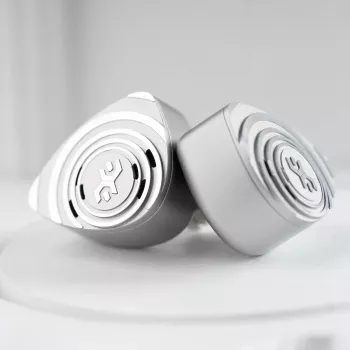
High-Fidelity IEM with Hybrid Drivers, Detachable Cable & PentaconnEar Interface is a strong fit for listeners who want a resolving in-ear monitor with serviceable cabling and a connector system aimed at stable, repeatable connections. It’s especially appealing for genre-hopping libraries where punchy lows and articulate highs both matter, and for owners who value replaceable cables for longevity.
If you’re also browsing other in-stock picks across the store, you can check the Golf Cart Bag with 14-Way Divider for organized carry and course convenience.
FAQ
Does a hybrid-driver IEM always sound better than a single-driver model?
No—performance depends on tuning and driver integration. Hybrids can improve extension and detail, but a poorly implemented crossover or phase alignment can make the sound feel disjointed compared with a well-tuned single driver.
What is the advantage of a PentaconnEar connector compared with other detachable cable types?
PentaconnEar connectors are designed for stable contact and durability with correct handling. The main advantage is consistent connection and serviceability, but replacement cables must be connector-compatible and inserted/removed properly to minimize wear.
Why does the sound change when swapping ear tips?
Ear tips change seal, insertion depth, bore size, and even how treble is damped by the tip material. Tip rolling is often the fastest way to fix bass loss, reduce sharpness, or improve comfort before assuming the IEM’s tuning is the problem.








Leave a comment