Twin-Over-Twin House Bunk Bed: Roof, Windows & Safety
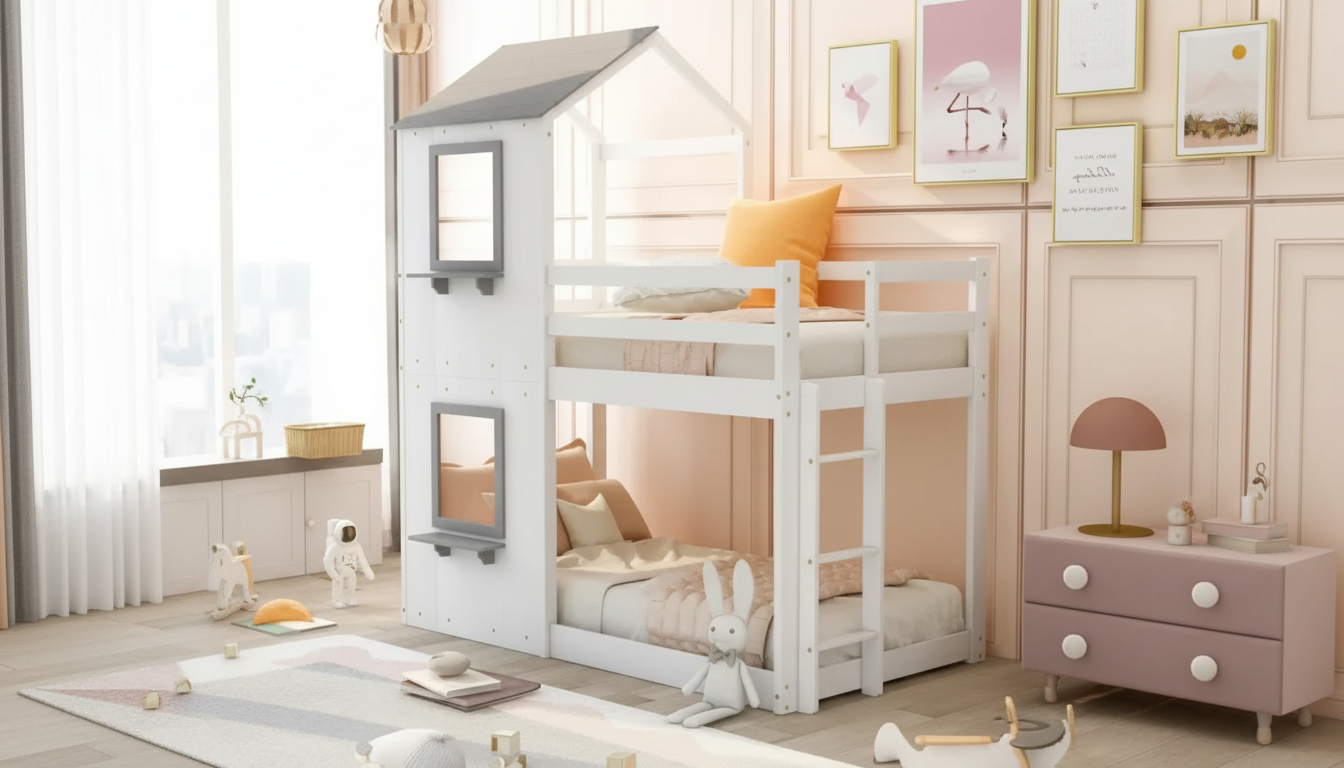
Wooden Twin Over Twin House Bunk Bed with Roof, Windows & Ladders for Kids
A twin-over-twin house bunk bed blends sleep space with a playful, room-defining design. With a roofline, window cutouts, and built-in ladders, this style can help maximize floor space while creating a cozy “little home” feel kids enjoy—while still keeping practical priorities like guardrails, sturdy construction, and easy everyday use front and center.
Quick look: what makes a house-style twin bunk different
- Twin-over-twin layout: fits two standard twin mattresses, keeping bedding simple and widely available.
- House frame details: roof + windows add a playful look without needing extra décor to create a theme.
- Two ladders: can improve access options depending on room layout and where the bed is placed.
- Space saver: great for shared rooms or sleepovers while leaving more open floor space than two separate beds.
- Planning matters: best results come from checking ceiling height, ladder clearance, and safe top-bunk use.
Design features that matter day to day
Roof frame
The roofline is the signature “house” detail, but it also changes how the bed feels in real use. A more open roof frame can keep the top bunk from feeling stuffy and makes it easier to add a clip-on light for nighttime reading, while still delivering that playful silhouette kids gravitate toward.
Window cutouts
Window openings add visual interest and can make the upper bunk feel less enclosed. Look for smooth edges, consistent sanding, and child-friendly finishing around any cutouts so hands and bedding don’t catch on rough spots.
Ladders (and where they land)
Two ladders can be a genuine convenience—especially in narrower rooms where only one side of the bed is easily accessible. Prioritize stable attachment points and step spacing that feels comfortable for kids’ feet, and make sure the ladder exit area isn’t forced into a tight wall corner.
Guardrails and entry points
A kid-focused bunk should have secure, full-length guardrails on the top bunk and a ladder opening that feels controlled (not overly wide). The goal is a confident climb up and down, plus protection that stays effective as kids roll in their sleep.
Under-bed space
Depending on the frame height, the lower area may allow room for slim storage bins or baskets. Even a small amount of organized storage can make a shared bedroom feel calmer by giving toys and extra blankets a defined home.
Safety essentials for kids’ bunk beds
House-style bunks are designed to be fun, but safety needs to be the non-negotiable baseline. For additional guidance, review the CPSC bunk bed safety information and the ASTM standards referenced for bunk bed performance and testing.
- Top-bunk age guidance: common recommendations advise the top bunk is for children 6 and older; use the lower bunk for younger kids.
- Guardrail height: choose a mattress thickness that doesn’t reduce effective rail height on the top bunk.
- Ladder habits: teach one-at-a-time climbing and keep the ladder zone free of toys to prevent slips.
- Ceiling and fan clearance: confirm headroom above the top bunk and keep the bed away from ceiling fans and dangling cords.
- Secure setup: re-tighten hardware after initial use and periodically thereafter, especially during the first few weeks.
- No hanging hazards: avoid tying ropes, jump ropes, or belts to the frame; keep window blind cords out of reach (see child safety guidance at HealthyChildren.org).
Bunk bed checklist before the first night
| Item to check | What to look for | Why it matters |
|---|---|---|
| Top-bunk guardrails | Rails on both sides; minimal gaps; secure fasteners | Reduces fall risk during sleep |
| Mattress thickness | Does not sit too high against the guardrail | Maintains safe rail height |
| Ladder stability | No wobble; steps feel solid; clear landing space | Prevents slips and shaky climbs |
| Hardware tightness | Bolts/screws fully tightened; no missing parts | Improves overall structural stability |
| Placement in room | Away from ceiling fans; not blocking doors; safe nightlight path | Safer movement at night |
Materials, finish, and durability considerations
Fit and layout: making it work in a real bedroom
Assembly and upkeep tips
Product spotlight: a playful house frame with roof, windows, and ladders
If you’re looking for a centerpiece that feels fun but still practical for everyday bedtime, the Wooden Twin Over Twin House Bunk Bed with Roof, Windows & Ladders for Kids combines a standard twin-over-twin layout with house-inspired details like a roofline and window cutouts. Built-in ladder access supports regular top-bunk use while keeping the overall footprint compact for shared rooms.
More in-stock picks to round out a kid-friendly space
- 3-Level Modern Cat Tree with Scratching Pad, Cushions, Condo and Toy (helpful if a family pet shares the room and you want to keep climbing directed to a designated spot).
- Gogo 1/6 BJD Doll with Big Head & Dimples (a giftable option for imaginative play that pairs naturally with a “little house” bedroom theme).
FAQ
What age is appropriate for the top bunk?
Common safety guidance recommends the top bunk for children age 6+; younger children are typically safer on the lower bunk. Reinforce safe ladder habits and keep guardrails in place.
Do standard twin mattresses fit a twin-over-twin bunk bed?
Yes—twin-over-twin frames are designed for standard twin mattresses. Verify recommended mattress thickness so the top guardrails remain adequately high.
How much space should be left around the ladders?
Leave enough clearance for a child to climb without bumping into walls or furniture and to step off safely. A clear path also helps with nighttime trips and makes changing sheets easier.






Leave a comment