Modern Wood Cat Tree: Wicker Basket, Hammock & Scratch
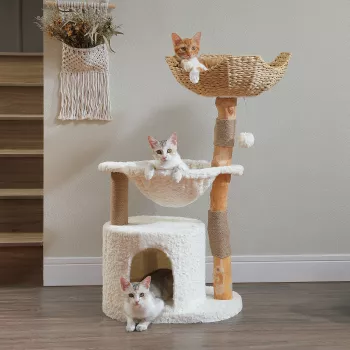
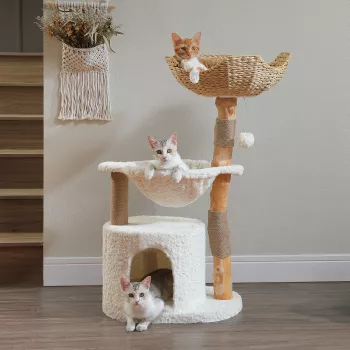
Modern Wood Cat Tree with Wicker Basket, Hammock & Scratching Posts
A modern cat tree should do more than give your cat a place to climb—it should support everyday scratching, provide comfortable sleep zones, and look like it belongs in your home. A wood-forward design helps this style of cat tree feel more like real furniture, while features like a wicker-style basket perch, a flexible hammock, and multiple scratching posts create a complete “cat station” that encourages daily use.
If you’re shopping for a piece that fits apartments, condos, and style-conscious spaces, the Modern Wood Cat Tree with Wicker Basket, Hammock & Scratching Posts is built around three priorities: vertical security, cozy lounging, and furniture-saving scratch options.
What Makes This Cat Tree Different
Many cat trees focus heavily on plush and height, but a modern wood cat tree takes a more balanced approach—comfortable where it counts, sturdy underfoot, and visually easier to place in a living room or bedroom.
- Modern wood look: Blends into home decor more naturally than fully carpeted towers, especially in minimalist or mid-century spaces.
- Wicker-style basket perch: Creates a raised “nest” that cats often choose for resting and observing.
- Hammock lounging zone: A flexible surface that suits both curlers and sprawlers.
- Multiple scratching posts: More than one acceptable scratch area can reduce competition in multi-cat homes.
- All-in-one daily routine: Rest + scratch + climb features make it more likely to be used consistently instead of turning into ignored furniture.
Comfort Features: Basket Perch + Hammock
Cats can be surprisingly specific about sleep surfaces. Some want a bordered edge to tuck into; others prefer a softer sling that adapts to their body. Having both options helps your cat rotate sleep spots throughout the day.
Basket perch: a “nest” for lounging and lookout time
The wicker-style basket perch suits cats that like enclosed edges for chin-resting, kneading, and curled naps. Many cats also use basket perches as a daily observation point—placing the cat tree near a window can dramatically increase how often the perch gets used.
Hammock: flexible comfort at an easy-to-reach level
A hammock is ideal for mid-level lounging and can be especially helpful for cats that want comfort without climbing to the very top. It can also support rest breaks during play, since cats often alternate between short bursts of activity and recovery time.
Quick comfort check before buying
| Cat preference | Feature to prioritize | Placement tip |
|---|---|---|
| Likes tight edges and “nesting” | Wicker-style basket perch | Near a window or quiet corner |
| Sprawls out or switches positions often | Hammock lounging area | Mid-level, away from drafts |
| Multi-cat household | More than one resting spot | Give each cat a separate approach path |
| Senior or less-jumpy cat | Lower, easy-access rest zones | Add a step stool if needed |
If your cat prefers softer textures, a thin washable throw or low-profile pad can make the basket or hammock more inviting—just avoid bulky bedding that compromises stability. For better naps, position the tree away from high-traffic doorways where sudden movement can startle a resting cat.
Scratching Posts: Protecting Furniture and Supporting Healthy Behavior
Scratching is normal, necessary cat behavior. It supports claw maintenance, full-body stretching, and scent marking. The key is making the “right” surface easier to access than the couch arm. The Modern Wood Cat Tree with Wicker Basket, Hammock & Scratching Posts includes multiple posts so your cat has more than one place to scratch—useful for households with multiple cats or for cats that like to scratch after waking up in different areas of the home.
- Place it near an existing hot spot: If your cat scratches a specific sofa corner, position the tree close to that spot so the preferred option is convenient.
- Make the posts part of play: A short wand-toy session around the posts helps your cat “discover” the scratch zones; reward correct scratching with a treat.
- Keep posts easy to approach: If your cat prefers vertical scratching, avoid blocking access with furniture. If your cat likes a slightly angled approach, place the tree so a post is naturally reached on the way up.
- Support the habit: Regular claw trims and occasional variety (like adding a separate scratch pad nearby) can reduce furniture-targeting for strong scratchers.
For more on why cats scratch and how to redirect it, see the ASPCA guidance on cat scratching.
Stability, Materials, and Where It Fits Best
Environmental placement and access to resources are a big part of feline comfort. For deeper enrichment guidance, International Cat Care offers excellent advice on home setup and cat needs: Environmental needs for cats.
Assembly, Cleaning, and Everyday Maintenance
Who This Cat Tree Suits
Alternatives to Compare
For a smaller footprint with multiple features, compare the 3-Level Modern Cat Tree with Scratching Pad, Cushions, Condo and Toy.
FAQ
How do you get a cat to use a new cat tree with a hammock and basket?
Place it near a favorite hangout or window, sprinkle a little catnip if your cat responds to it, and use a wand toy to guide exploration around the scratching posts. Reward calm sniffing, climbing, and scratching on the tree, and avoid placing your cat onto it forcefully.
Where should a cat tree with scratching posts be placed?
Put it where your cat already spends time—near a window, close to a family area, or directly beside a former furniture-scratching spot. A wall-adjacent corner often feels more stable and can increase confidence when climbing.
Is a hammock safe for larger cats?
It can be safe if the tree is built for the cat’s weight and assembled correctly. Follow the included weight guidance, tighten all hardware, and inspect the hammock attachments over time for sagging or looseness.







Leave a comment